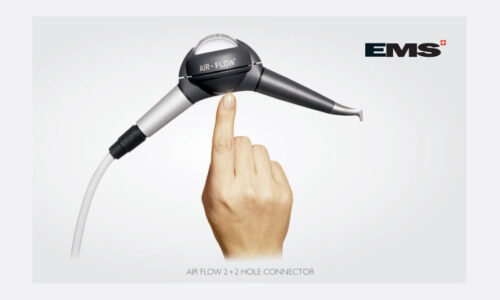
Professional hygiene (scaling, tooth brushing, airflow) - done periodically - prevents caries, periodontal disease and staining of teeth.
The frequency and type of hygiene is recommended on a case-by-case basis. Scaling is the ultrasonic method that removes major tartar deposits and nicotinic and other stains; Airflow cleans teeth in inaccessible areas using a water jet with abrasive powder and pressure.
The main cause of gum disease is plaque, a sticky, colourless, sticky film that constantly builds up on the teeth, leading to gum bleeding and periodontal disease. If not cleaned, plaque mineralises and forms tartar, which attacks the supporting tissues of the teeth.
What is scaling and why is professional tooth brushing necessary?
Scaling and professional tooth brushing are necessary to remove tartar (the grey, yellow or brown stains deposited at the base of the teeth near the gums) which is the main cause of gum disease.
A few minutes after brushing, a very thin layer of saliva, protein and bacteria forms on the tooth surface which acts as a base for the growing bacteria to attach to. Within a few hours, the build-up of various species of bacteria, together with sugar from the food you eat, results in the formation of a sticky yellow or white-coloured substance known as dental plaque. If this is left on the teeth it can attract minerals from saliva, hardening and forming tartar. These are damaging to the health of the gums and can cause tooth disease, which progresses and can lead to periodontal disease.
Scaling and professional tooth brushing help to remove and reverse gum disease and can reverse the progression of periodontal disease.
How often is it necessary to have professional dental scaling and brushing?
Your dentist is the best judge in this matter, and can advise you on the length of time needed. Most dentists recommend having professional dental scaling and brushing twice a year. If you can maintain exceptional oral hygiene, this is reduced to once a year.
Is the scaling procedure painful?
If the deposits are superficial, scaling is not painful. If there are deep deposits, the dentist will in most cases use local anaesthesia before the procedure.
There may also be light bleeding because plaque and tartar cause the gums to become inflamed, and touching heavily inflamed gums can cause bleeding.
Through a correct tooth brushing technique, by using mouthwash and dental floss, not only the appearance of caries and periodontal disease is prevented, but also the appearance of bacterial plaque and dental tartar is reduced. Regular visits to the dentist for scaling and professional tooth brushing are an integral part of basic oral care.
Dental hygiene involves the complete removal of tartar by several methods.
The sub and supra gingival tartar is removed manually with the help of the removable tweezers and mechanically with the ultrasonic instrument handles. Ultrasonic scaling has a non-traumatising action, it is well tolerated and painless in the absence of dentine hypersensitivity. Patients benefit from the prior application of an anaesthetic gel for maximum comfort.
The result of a scaling is a smooth, polished surface on which bacterial plaque and tartar deposits are not favoured.
This result is achieved, in addition to professional tooth brushing, with special abrasive pastes, polishing gums and by using the Air-flow prophylaxis device. It generates a jet of air + water + sodium bicarbonate, with a very high pressure, which is projected both on the visible dental surfaces and in the less accessible interdental and subgingival areas. The procedure is very effective in removing tartar, plaque and extrinsic discolouration caused by smoking and consumption of certain foods, coffee, black tea, etc. Sodium bicarbonate also has a medicinal effect, stabilising the pH and inhibiting plaque formation.
At the end of the professional hygienisation and detraction procedure, remineralisation, fluoridation and solutions to prevent gum inflammation can be applied. All these manoeuvres will create a feeling of freshness and pleasant breath.
Establishing correct home hygiene techniques increases the results and benefits of professional hygiene.